
Skip to product information
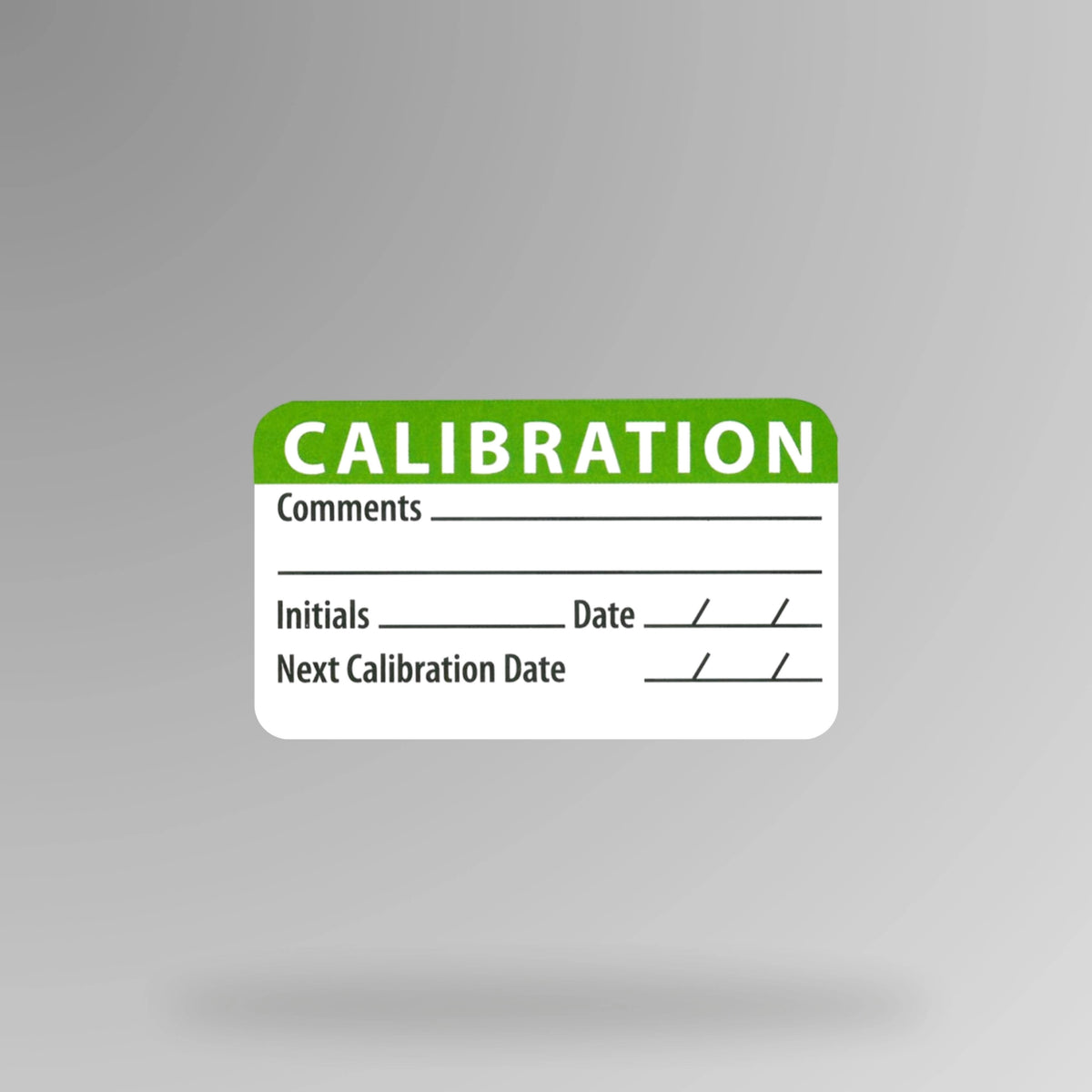


Indoor Calibration Adhesive Label
Keep calibration records on the equipment where they belong and easy to find during audits. Provides space to record calibration dates and details in a clean adhesive label format. Suited to workshops and industrial sites where tracking equipment accuracy and maintaining measurement standards are an ongoing requirement.
$24.15 AUD
inc. GST
Taxes included.
Product Specifications
Who is this for
Shipping & Delivery
Shipping Information
Review our shipping options and delivery times below.
| State | Metro | Regional |
|---|---|---|
| WA | 1 - 5 Business Days / Pickup Available | 4- 7 Business Days |
| NSW | 2 - 5 Business Days | 4- 7 Business Days |
| VIC | 2 - 5 Business Days | 4- 7 Business Days |
| QLD | 2 - 5 Business Days | 4- 7 Business Days |
| SA | 2 - 5 Business Days | 4- 7 Business Days |
| TAS | 2 - 5 Business Days | 4- 7 Business Days |
| NT | 2 - 5 Business Days | 4- 7 Business Days |
| ACT | 2 - 5 Business Days | 4- 7 Business Days |
Additional Information
Complete Your Safety Kit


Frequently asked questions
How long will it take to receive my safety label order?
Standard safety label orders are typically dispatched within 3 to 5 business days. Custom printed labels, including those with logos, specific data fields, or non standard sizing, may require additional production time, usually 5 to 10 business days depending on complexity. We ship Australia wide, and express delivery options are available at checkout if you have an urgent requirement. If you are working to a compliance deadline or a site audit, let us know when you order and we will do our best to accommodate your timeframe.
What types of safety labels does Brute Safety Products supply?
We supply three core types of safety labels: calibration labels, test and tag labels, and quarantine labels. Calibration labels are used to record when equipment was last tested and when it is next due. Test and tag labels comply with Australian electrical safety standards and display test dates, results, and the tester's details. Quarantine labels clearly identify equipment or areas that are out of service or awaiting inspection. All labels are available in standard sizes, and custom options are available to suit your specific workplace or compliance requirements. If you are unsure which label type suits your application, our team is happy to help.
Do your test and tag labels meet Australian compliance requirements?
Yes, our test and tag labels are designed to align with the requirements of AS/NZS 3760, the Australian and New Zealand standard for in service safety inspection and testing of electrical equipment. The labels include clearly defined fields for the test date, retest date, pass or fail result, and the technician's identifier. We recommend confirming with your licensed tester or WHS adviser that the label format meets any site specific or industry specific requirements in your state, as these can vary. If you need a label layout adjusted to match a particular compliance format, we can accommodate that through our custom label service.
Can I order custom safety labels with our company logo or specific fields?
Yes, all of our safety labels can be customised with your company logo, business name, colour scheme, or specific data fields. This is particularly useful for organisations that need to align labels with internal compliance systems or branded documentation. To get started, simply provide your artwork as a high resolution PDF, AI, or EPS file. If you do not have print ready artwork, we can assist with layout and design. Custom orders are quoted individually, and we recommend getting in touch early if you have a deadline, as lead times vary depending on complexity and quantity.
What materials are your safety labels printed on, and will they hold up in tough conditions?
Our safety labels are printed on durable, professional grade materials suited to Australian workplace conditions. Options include water resistant synthetic stock and tamper evident materials, depending on the application. Test and tag labels, for example, need to withstand handling on tools and electrical equipment, so they are printed on materials that resist tearing, moisture, and UV exposure. Calibration and quarantine labels are also available in weatherproof finishes for outdoor or high humidity environments. When placing your order, let us know where the labels will be used and we will recommend the most appropriate material.