
Skip to product information
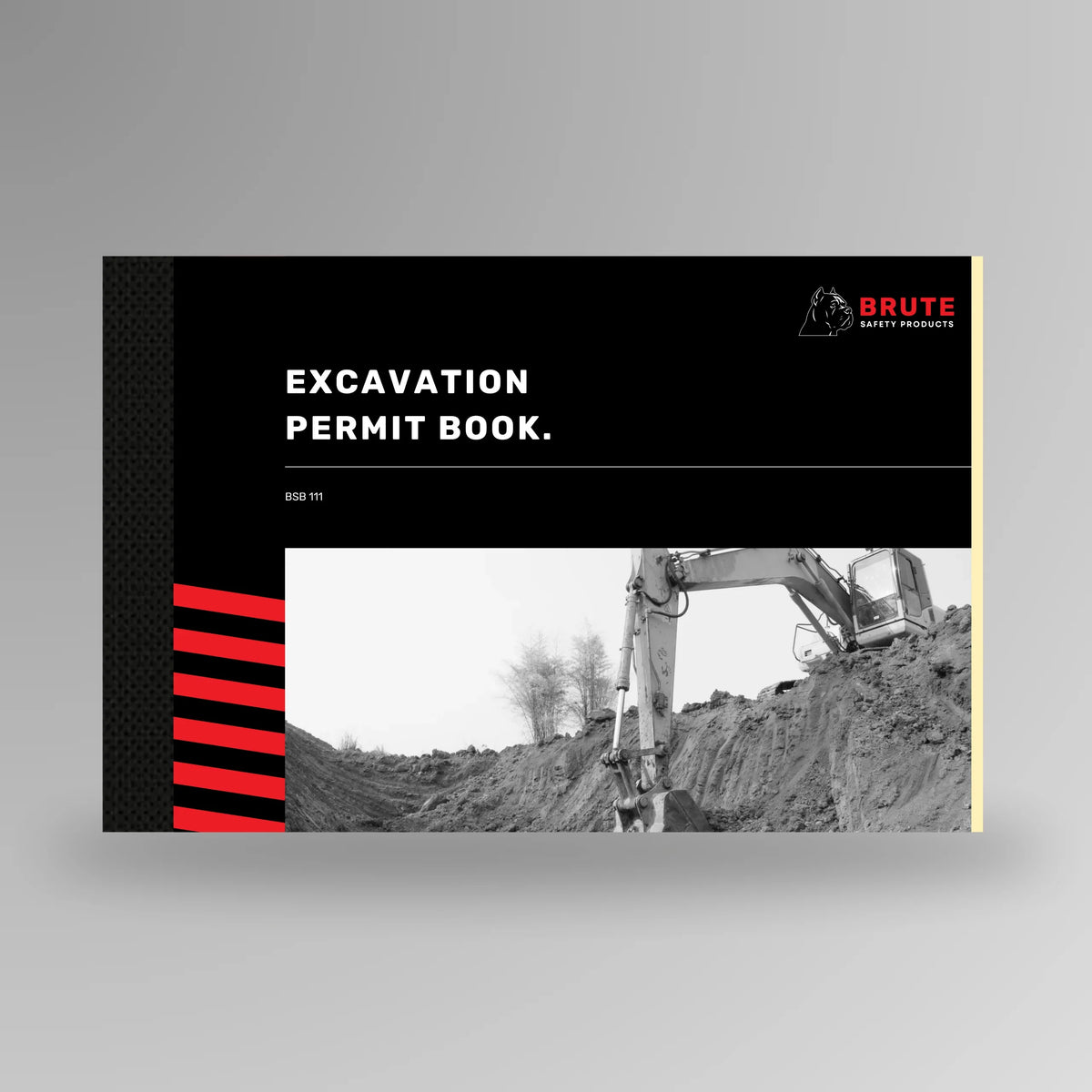


Excavation Permit Book
Authorise dig work and confirm underground service checks are done before breaking ground. Each of the 50 duplicate sets records dig location, service location checks, control measures, approved equipment and supervisor sign off. Duplicate copies protect workers and demonstrate due diligence.
$27.50 AUD
inc. GST
Taxes included.
Product Specifications
Who is this for
Shipping & Delivery
Shipping Information
Review our shipping options and delivery times below.
| State | Metro | Regional |
|---|---|---|
| WA | 1 - 5 Business Days / Pickup Available | 4- 7 Business Days |
| NSW | 2 - 5 Business Days | 4- 7 Business Days |
| VIC | 2 - 5 Business Days | 4- 7 Business Days |
| QLD | 2 - 5 Business Days | 4- 7 Business Days |
| SA | 2 - 5 Business Days | 4- 7 Business Days |
| TAS | 2 - 5 Business Days | 4- 7 Business Days |
| NT | 2 - 5 Business Days | 4- 7 Business Days |
| ACT | 2 - 5 Business Days | 4- 7 Business Days |
Additional Information
Complete Your Safety Kit


Frequently asked questions
How quickly will my compliance book order be dispatched?
Standard compliance book orders are dispatched within 1 to 3 business days from our Perth, WA facility. We ship Australia wide, and express delivery options are available if you are working to a deadline. Free shipping applies to orders over $200. If you need books urgently for a site audit or project start, let us know when you order and we will do our best to accommodate your timeframe.
What compliance books does Brute Safety Products supply?
We supply a full range of Australian made compliance books for construction, civil, and industrial worksites. The range includes daily site diaries, dayworks books, JSA and SWMS books, toolbox meeting books, refuelling log books, delivery docket books, plant and labour hire books, fatigue books, working at heights permit books, hot works permit books, excavation permit books, site visitor register books, incident report books, test and tag log books, and subcontractor docket books. All books are printed in Perth, WA, and are designed to support WHS compliance and practical site documentation needs. If you are unsure which book suits your situation, get in touch and we can point you in the right direction.
Are your compliance books suitable for high risk work permits?
Yes, several books in our range are specifically designed for high risk work activities. We stock working at heights permit books, hot works permit books, and excavation permit books, each with fields tailored to the specific hazards and controls required for those activities. Each book contains 50 duplicate sets, includes a writing shield to protect the copy beneath, and is printed on quality stock that holds up to site conditions. These books are designed to align with Australian WHS requirements for documenting high risk work, though we recommend checking with your WHS adviser or principal contractor for any site specific requirements.
Do compliance books use duplicate sets, and how does that work?
Yes, most of our compliance books are printed as duplicate NCR (no carbon required) sets. When you write on the top copy, the information transfers to the copy beneath it automatically, with no carbon paper needed. One copy stays in the book as your permanent record, and the other can be torn out and given to a client, supervisor, or head contractor. This is particularly useful for delivery dockets, dayworks records, and permit books where multiple parties need a copy of the same document. It saves time on site and ensures your paperwork stays consistent and legible.
Can I get compliance books custom printed with my company branding?
Yes, all of our compliance books can be custom printed to suit your business. You can add your company logo, adjust field names to match your internal procedures, include project specific information, or change the layout to reflect your existing documentation processes. Custom books help workers fill in records correctly because the forms are familiar and relevant to their work. To get started, provide your artwork as a high resolution PDF, AI, or EPS file, or we can assist with layout and design. Get in touch to discuss quantities and lead times for your custom order.