
Skip to product information
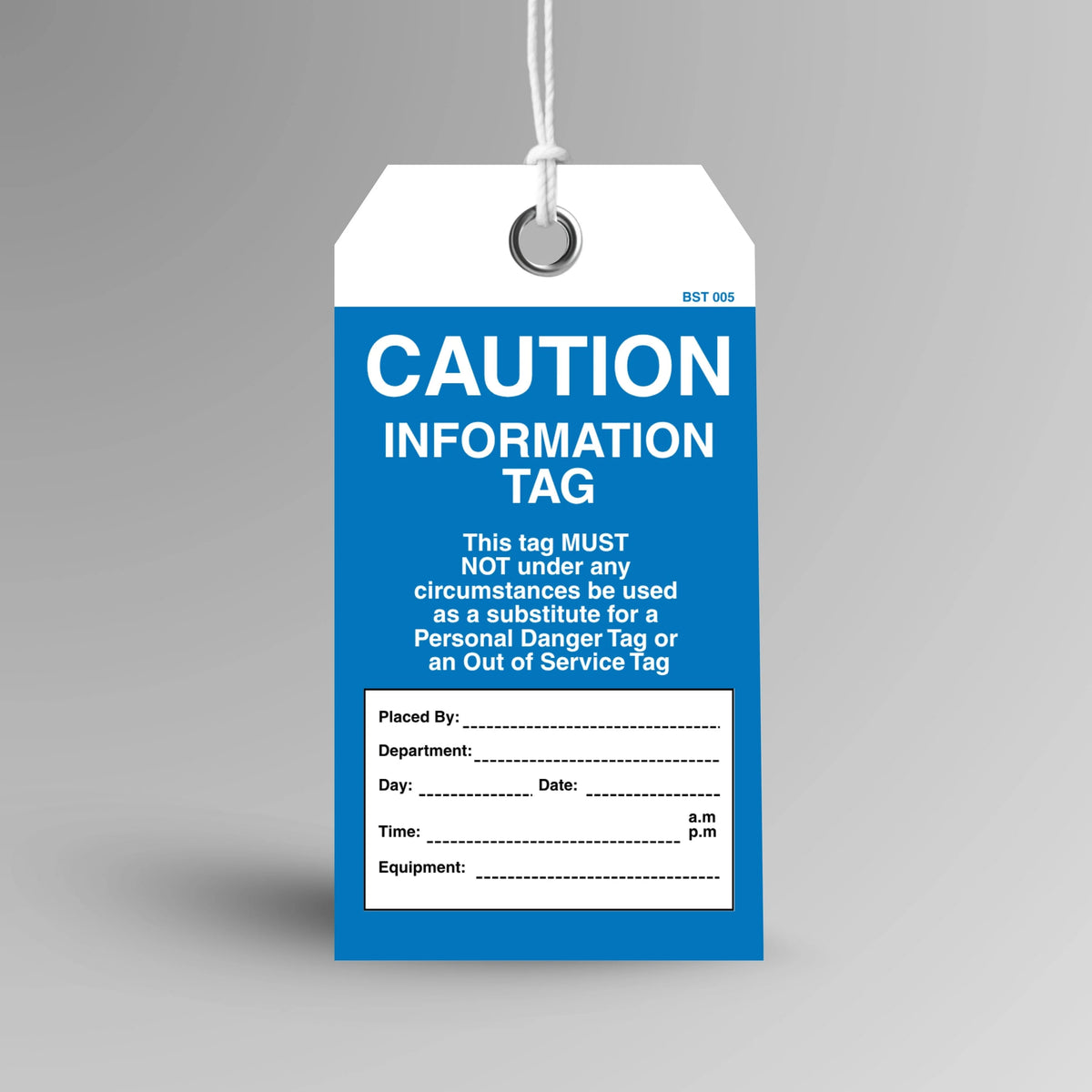


Caution Information Tag
For situations that need to be documented without triggering a full danger or out of service response. The front captures placed by, department, day, date, time, and equipment, and the reverse offers a generous comments section. Note: not a substitute for a Personal Danger Tag or Out of Service Tag.
$35.50 AUD
inc. GST
Taxes included.
Product Specifications
Who is this for
Shipping & Delivery
Shipping Information
Review our shipping options and delivery times below.
| State | Metro | Regional |
|---|---|---|
| WA | 1 - 5 Business Days / Pickup Available | 4- 7 Business Days |
| NSW | 2 - 5 Business Days | 4- 7 Business Days |
| VIC | 2 - 5 Business Days | 4- 7 Business Days |
| QLD | 2 - 5 Business Days | 4- 7 Business Days |
| SA | 2 - 5 Business Days | 4- 7 Business Days |
| TAS | 2 - 5 Business Days | 4- 7 Business Days |
| NT | 2 - 5 Business Days | 4- 7 Business Days |
| ACT | 2 - 5 Business Days | 4- 7 Business Days |
Additional Information
Complete Your Safety Kit


Frequently asked questions
How many tags come in a pack?
All of our tearproof tag packs contain 100 tags, making them practical for stocking site offices, tool rooms, and maintenance facilities. Buying in packs keeps per unit costs down and ensures you have adequate supply on hand without needing to reorder frequently. For larger operations managing multiple sites or high tag turnover, trade accounts and bulk pricing are available — contact the team to discuss your requirements.
Do the tearproof tags come pre-strung?
Yes, our tearproof tags come pre-strung and ready to use straight out of the pack. This saves time on busy sites where tags need to be applied quickly during isolation or equipment inspection procedures. The stringing is suitable for attaching tags to valves, switches, equipment handles, and isolation points. If you need tags attached using a specific method for your site procedures, the metal eyelet also accepts wire, cable ties, or nylon rope as alternatives.
What size eyelet do the tearproof tags have?
Each tearproof tag comes fitted with an 8mm metal eyelet. The metal eyelet reinforces the attachment point and prevents the tag from tearing where it is hung, which is the most common failure point on cheaper tags. An 8mm eyelet is a practical size for most standard wire, cable ties, padlock hasps, and isolation points found on Australian worksites, making the tags compatible with the majority of lockout tagout and equipment isolation setups without any modification.
What material are the tearproof safety tags made from?
Our tearproof safety tags are made from polypropylene, a synthetic material that resists tearing, moisture, oils, chemicals, and UV exposure. Unlike card or paper tags which deteriorate quickly on site, polypropylene maintains its integrity in the conditions you find on Australian construction, mining, and industrial worksites — heat, dust, grease, and rough handling included. Each tag is printed with no fade inks to ensure critical safety information stays legible throughout the tag's service life.
What types of safety tags are available in the tearproof range?
Our tearproof range covers a wide variety of tag types to suit most Australian worksite requirements. Available titles include Danger Do Not Start, Danger Do Not Operate, Out of Service, Personal Danger, Do Not Energise, Caution Repair, Caution Information, Out of Service, Commissioning, Information, Warning Do Not Remove, Inspected Ready to Use, Quality Control, Accepted, Rejected, Inspection, Passed Inspection, Failed Inspection, Repair Order, Leak Inspection, Q.A Approved, Q.A Hold, Quarantine, Full Cylinder, and Empty Cylinder. All are made from polypropylene with a metal eyelet and come pre-strung in packs of 100.